

Pelvic Exam Training Simulation
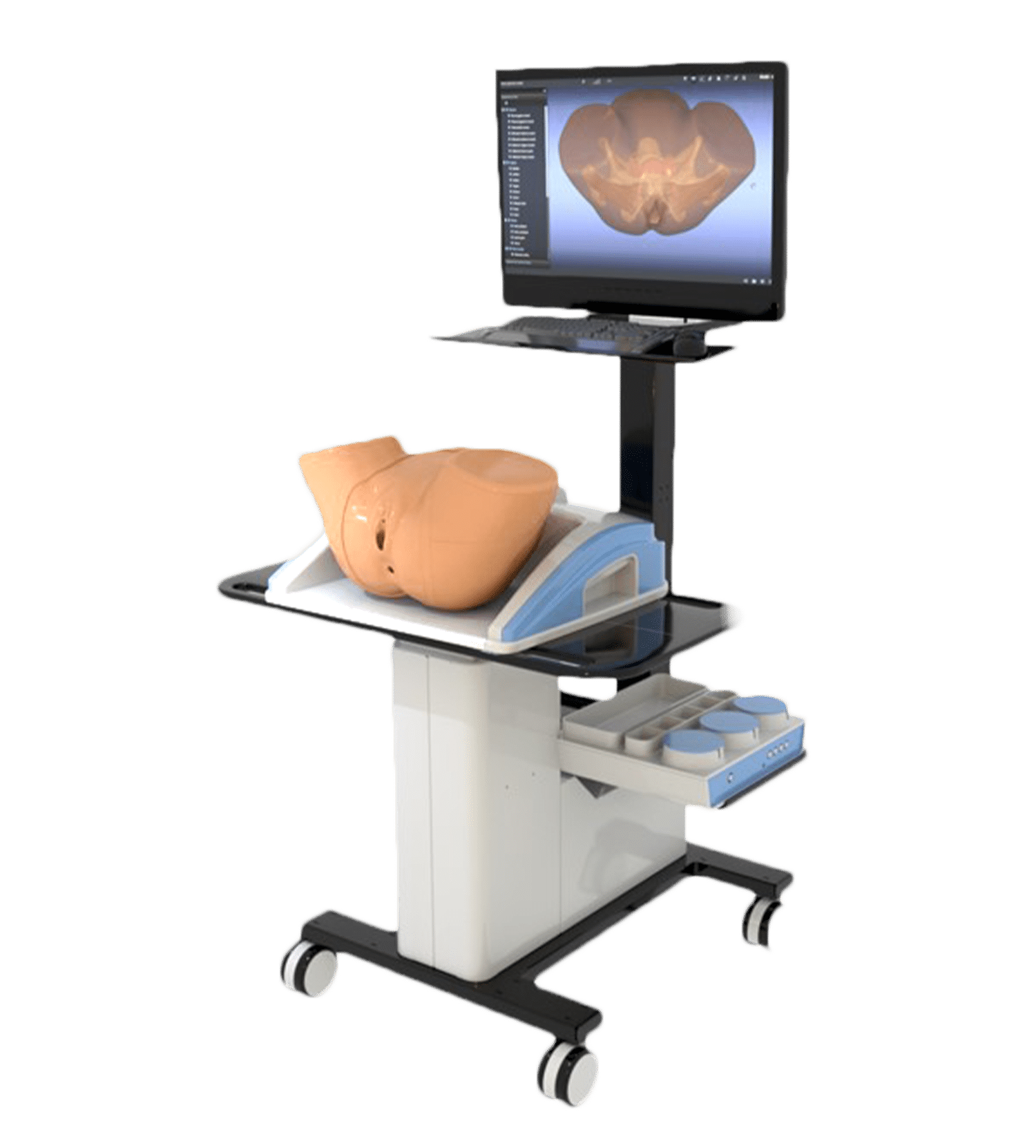
The Pelvic Mentor™ is a sophisticated, advanced simulator designed for hands-on anatomy and pelvic exam training. This versatile tool caters to nurses, nurse practitioners, doctorate of nursing programs, certified nurse midwives, OB/GYNs, family practice doctors, physician assistants, medical students, and physician assistant learners. It offers detailed knowledge of pelvic anatomy and the necessary skills to perform accurate pelvic exams.
As a powerful didactic tool, the Pelvic Mentor™ provides immediate feedback on anatomical recognition, ensuring precise pelvic exam practice. Its unique combination of anatomical structure, finger sensation, and virtual model creates an effective training tool aimed at boosting physician confidence during examinations. Unlike other systems, the Pelvic Mentor™ includes various pathologies, highlighting critical conditions that are vital to identify. This realistic simulator, with accurate anatomy identification, is user-friendly for learners to practice independently.
The Pelvic Mentor™ offers unmatched realism and accuracy in pelvic anatomy and exam simulation. This advanced training solution combines a physical mannequin with a 3D virtual system, using sensors on trainee’s fingers for real-time feedback during palpation, abdominal pressure, and cervix manipulation.
Key features include:
The Pelvic Mentor™ offers numerous advantages to enhance the learning experience and prepare learners for successful careers in the medical field:
Book
A Virtual Demo
The practical modules offered by the Pelvic Mentor™, designed to enhance your proficiency in pelvic examinations:
Anatomical Recognition: Improve your understanding of pelvic anatomy, shorten the learning curve, and achieve better outcomes in pelvic procedures with hands-on experience and physical sensation of the anatomy.
Pelvic Exam: Build confidence and expertise using the realistic Pelvic Mentor™ simulator before conducting pelvic exams on standardized patients. Encounter a variety of pathologies with interchangeable anatomies.
Speculum Examination and Pap Test: Monitor the speculum on the screen and track the patient’s discomfort level on a pain meter, providing a well-rounded learning experience.


At Phantasim, we offer an aftercare package to ensure our friendly support team can offer assistance should you incur an issue with your simulator or modules. Phantasim are based in Western Australia, however your aftercare package allows us to remotely access your simulator via satellite and resolve any issues remotely. Should your simulator require hands-on assessment, our support team will visit your facility anywhere within Australia or New Zealand to appraise your simulator and provide a solution.


Whether you’re in Australia or New Zealand, our team at Phantasim are your surgical simulation partners. Our dedicated team handle distribution, maintenance, and ongoing aftercare for simulation units and modules.

Phantasim are proudly partnered with VirtaMed.
Our aftercare team at Phantasim are just a phone call away. Once you’ve received your simulator, we will visit your facility for installation and analysis as well as provide ongoing aftercare and support.

Each simulator has remote access capabilities, allowing our team to assess any issues or irregular activities from any location. Alternatively, our support team can visit your facility as part of your aftercare package.

Barry T. Katzen, M.D., FACR, FACC, FSIR
Director
Cardiovascular Center and department of Internal Medicine, Sankt Katharinen, Frankfurt Germany
“
We have been very interested in improving patient care through learning and essentially rehearsing the procedures before we treat the patients.
Horst Sievert MD PhD
Director
Cardiovascular Center and department of Internal Medicine, Sankt Katharinen, Frankfurt Germany
“
Simulators will have a place in the future to plan a procedure.
Prof. Michael Glikson
Director of Electrophysiology and Pacing
Sheba Medical Center, Israel
“
I remember my days as a new intern….the first cases I performed were very difficult and it was a scary experience, since it takes between 10-20 procedures until you really feel that you are proficient.
Dr Thomas Bossmar, MD, PhD
Consultant at the Women's Clinic and Practicum
SuS in Lund
“
I want to emphatically state that simulated laparoscopic training with LapSim should be a cornerstone of surgeon training and absolutely contributes to patient safety.